Chicken Inasal in Bacolod:
Tangy, Not Sweet
Inasal is grilled all over the Philippines, but the version that started here tastes different — sharper, smokier, and served without a drop of sauce. Here's what makes Bacolod's the original, and how to order it the way locals do.
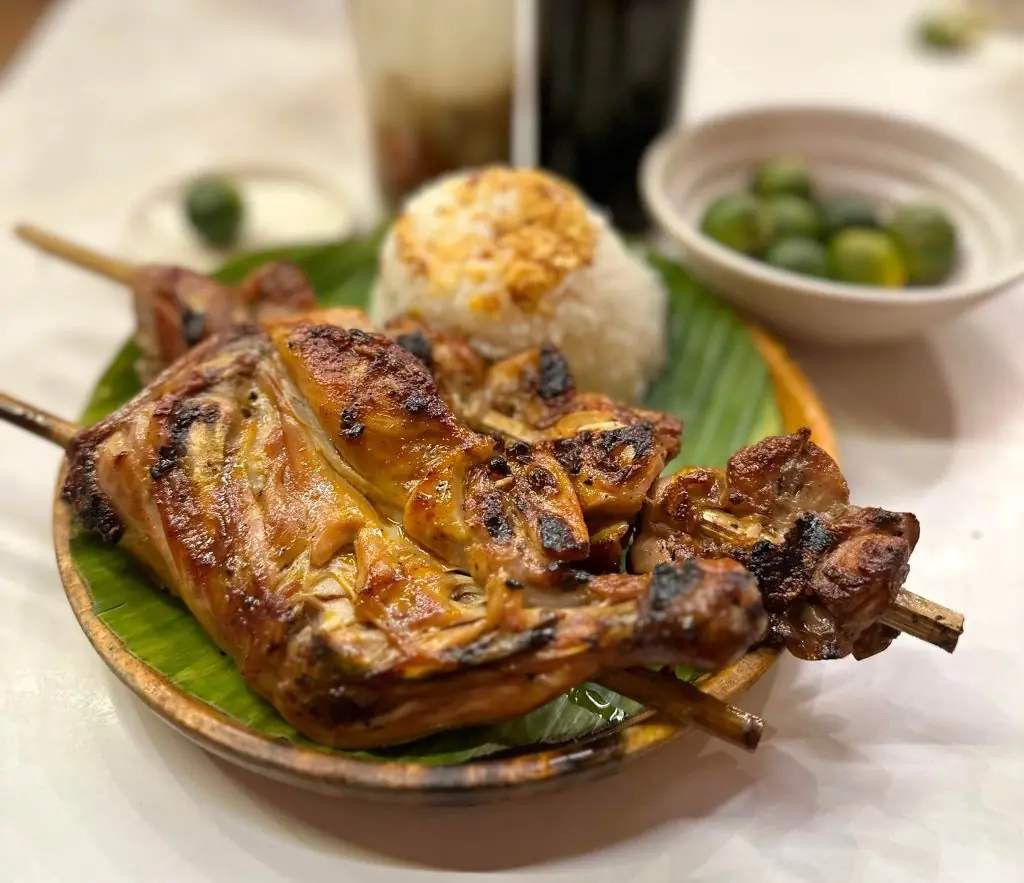
If you're planning a trip to the Philippines and want to eat the way Filipinos actually eat, put Bacolod near the top of your list. Known as the City of Smiles, it sits on the island of Negros and is the birthplace of one of the country's most recognisable dishes. Chicken inasal is now a national favourite — but the truest version never left home.
What makes Bacolod inasal different
Inasal — pronounced "ee-nah-sahl" — simply means "grilled" in Hiligaynon, the local language. The distinction that matters is what goes on before the fire. In Manila and much of the north, the marinade is sweetened with brown sugar and the chicken often arrives under a thick, syrupy sauce. Bacolod's version does the opposite.
Here the chicken is marinated overnight in calamansi (a small, intensely aromatic Philippine lime), coconut vinegar, garlic, ginger, lemongrass, and soy sauce. As it grills over charcoal it's basted again and again with annatto oil, pressed from achuete seeds — that's where the deep orange colour and faint nutty aroma come from. What reaches your plate is sour, savoury and smoky all at once, with nothing poured over the top.
Where it came from
Inasal grew out of the grilling traditions of the Western Visayas in the middle of the last century, shaped by the same open-fire cooking that produced lechon. It moved from home kitchens to commerce through small roadside kiosks, and by the 1970s and 1980s the stalls clustered around Bacolod's old Post Office and public markets had turned it into an everyday meal rather than an occasion.
It stuck. Bacolod picked up the nickname Manokan Country — chicken country — and today inasal is grilled everywhere from plastic-stool roadside setups to air-conditioned dining rooms, at nearly every hour the city is awake.
MassKara Festival: October in Bacolod
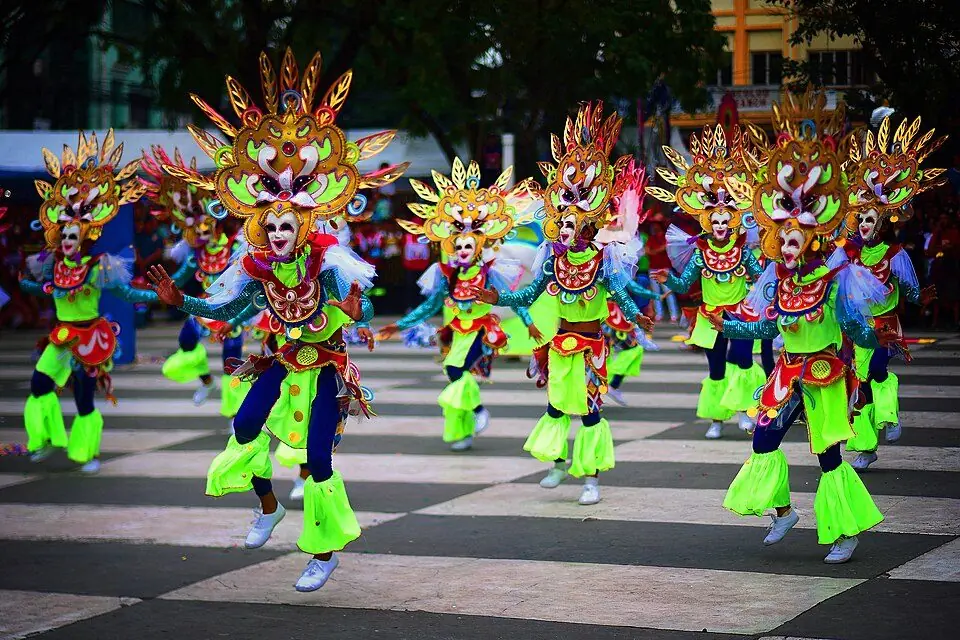
If you can choose when to visit, choose October. The MassKara Festival began in 1980, during a collapse in sugar prices and in the shadow of a ferry disaster that took hundreds of local lives. The city's response was to put on smiling masks and dance in the street. The name joins mass — a crowd — with cara, face.
MassKara Festival 2026
- Festival period
- October 1–18
- Main events
- October 9–18 — street dance and arena competitions, Barangay MassKara, Electric MassKara night floats
- Closing & awarding
- October 25 — a week after the festival period closes
The first week is the warm-up: pageant preliminaries, mall shows and sports events. The second is the festival most people picture. Hotel prices and traffic peak alongside it.
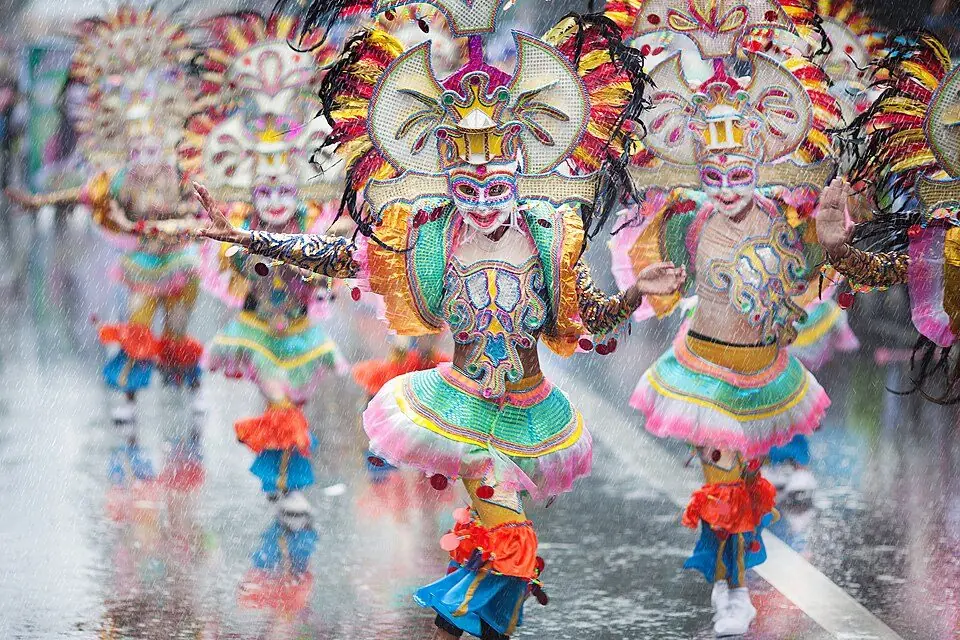
During the festival the streets fill with charcoal smoke. Vendors grill through the night, and plates of inasal come with unlimited garlic rice, atchara (sweet pickled green papaya), and a dish of soy sauce cut with calamansi and crushed chillies. For a lot of visitors the eating turns out to be as memorable as the dancing.
The legendary trio
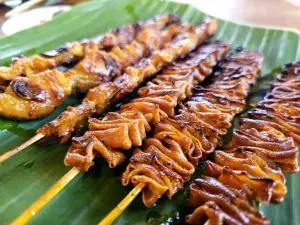
Order chicken and you've ordered half a meal. The skewers are what locals reach for first — cheap, intensely flavoured, and grilled alongside the main event.
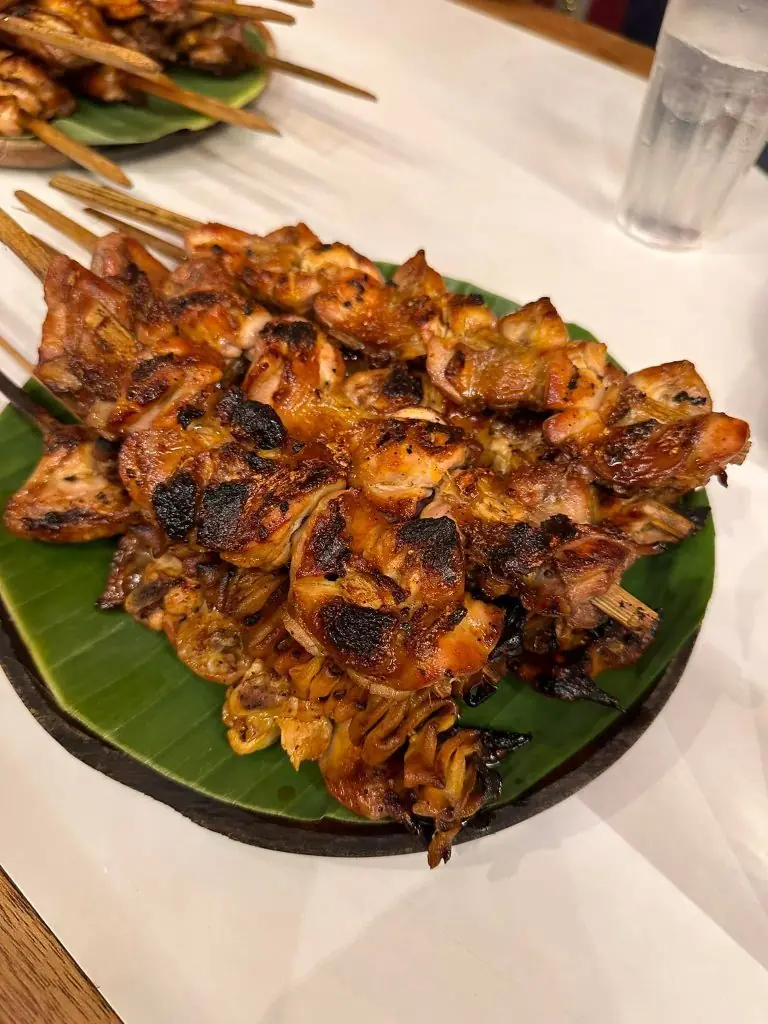
Isaw
Chicken intestinesCleaned, marinated, then grilled until the outside crisps and the inside stays chewy. The one to try first.
Isol
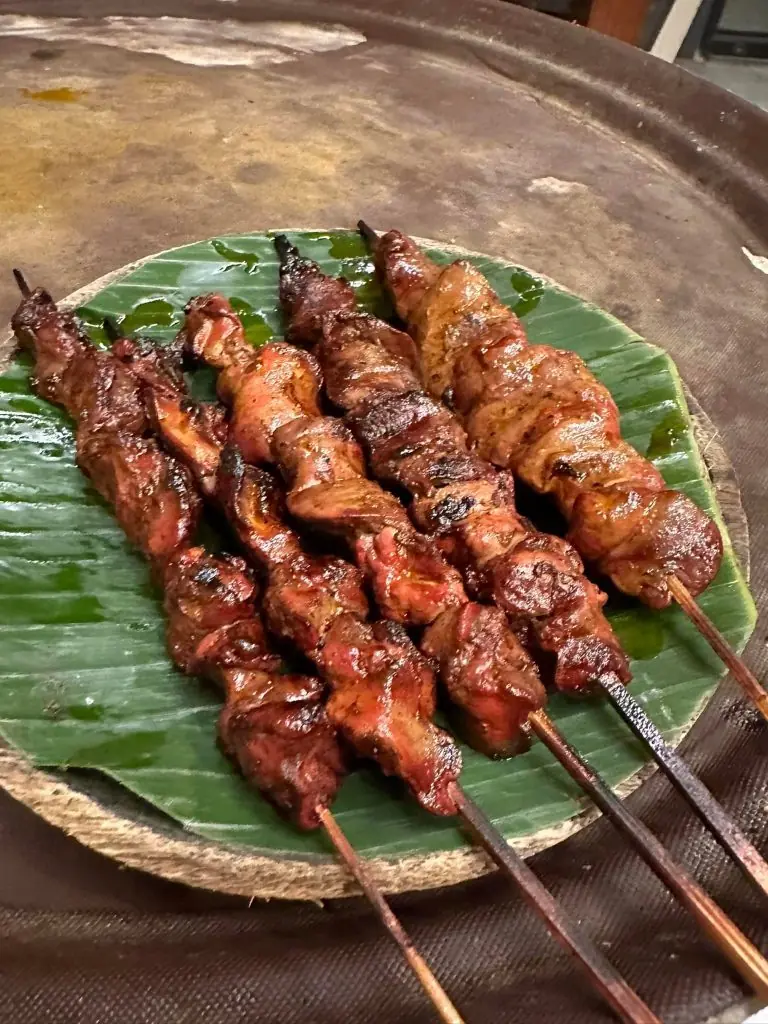
Chicken tailFatty, juicy, and far richer than its size suggests. Renders down over the fire into something close to crackling.
Baticulon
Chicken gizzardsFirm and meaty with a proper bite. Best dipped straight into vinegar, which cuts the density.
How to order like a local
- Pick your cut. Pecho is breast — leaner, milder. Paa is leg and thigh — darker, juicier, and what most regulars order.
- Build your own dip. Soy sauce, a squeeze of calamansi, vinegar, and crushed siling labuyo if you want heat. Every table has the components; nobody hands you a finished sauce.
- Spoon the chicken oil over your rice. The orange annatto oil at the bottom of the plate is the point, not a spill.
- Say yes to unlimited rice. It's standard, and the meal is built around it.
- Drink cold. San Miguel if you want beer, fresh buko juice if you don't.
- Book ahead in October. Festival season fills dining rooms early, especially in the evenings.
Where to eat it
Plenty of places grill inasal. Fewer stay strict about it. At Masskara Chicken Inasal the marinade keeps the original proportions — calamansi and vinegar forward, no sugar doing the work — and the chicken goes over charcoal rather than gas. The dining rooms are air-conditioned and easy to navigate if it's your first time in the Philippines, and the walls are lined with panels reclaimed from old Bacolod houses.
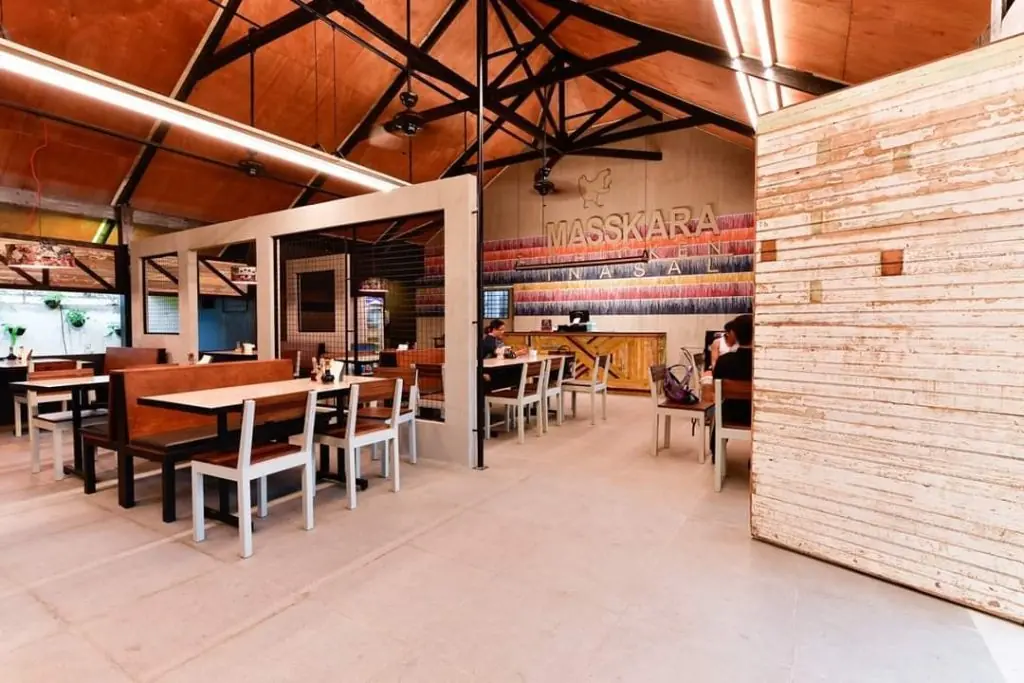
There are eight branches across Negros and Panay: five in Bacolod — 6th Street, East NGC, Buri Road, Old Airport and La Salle — two in Iloilo City, and one in Victorias.
Come hungry
Find the branch nearest you, or call ahead if you're visiting during MassKara season.